In healthcare settings, safety and hygiene are not optional. Yet a risk that is often underestimated persists in many hospitals and clinics: the use of non-medical IT equipment that is unsuitable for the demands of a hospital environment.
A simple everyday action can then become dangerous.
A common scenario… with serious consequences
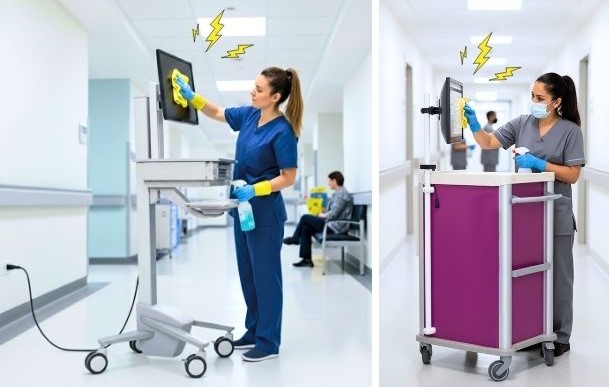
A cleaner wipes a computer used in a hospital ward with a damp disinfectant wipe.
Nothing could be more normal: regular disinfection of surfaces is essential to combat hospital-acquired infections.
👉 The problem?
Most ‘consumer’ PCs and monitors are neither waterproof nor designed to withstand liquids or disinfectants.
When non-medical IT equipment is switched on, liquid ingress can cause a short circuit, an electrical leak, a risk of electrocution, sudden equipment failure, or even a fire. These incidents can endanger healthcare workers, cleaning staff and patients, and disrupt the continuity of care.
Hospital hygiene: requirements incompatible with consumer-grade equipment
In a medical environment, equipment is disinfected several times a day, the products used are harsh (alcohol, quaternary ammonium, chlorine-based solutions, etc.) and the devices are handled by numerous users.
IT equipment must therefore be IP65-rated, resistant to disinfectants, electrically safe and compliant with medical standards.
👉 A standard desktop computer or a conventional monitor was never designed for these purposes.
Why medical-grade IT equipment is essential
Simply continuing to use ‘consumer-grade’ equipment in a hospital setting exposes staff to unnecessary risks, increases maintenance and replacement costs, compromises electrical safety, and jeopardises regulatory compliance. And all of this falls under the responsibility of the Chief Information Officer (CIO).
In contrast, medical-grade IT equipment is designed from the outset to meet the requirements of the healthcare sector.
Good hospital hygiene practices: the key to prevention
Safety in a hospital setting relies on a combination of rigorous procedures and suitable equipment. To minimise any residual risk during maintenance, we always recommend unplugging the trolley from its 220V mains socket before any cleaning operation. This simple step eliminates any risk of electric shock in the event of accidental contact between a disinfectant liquid and the power connectors.
Beyond handling, the choice of equipment is crucial:
The use of waterproof medical screens is essential. Unlike standard monitors, they can withstand frequent spraying and wiping without water seeping in.
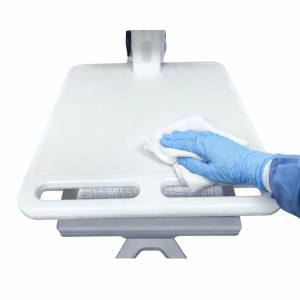
Choosing trolleys that are ideally free of gaps is also a key factor. A structure with smooth surfaces and no recesses facilitates thorough and rapid cleaning, preventing the proliferation of bacterial niches and making it easier
Mediantech: IT equipment designed for the hospital environment
At Mediantech, we design and provide IT solutions specifically tailored to medical environments.
Our equipment includes:

Waterproof and resistant to disinfectants

Certified for medical environments
CE-marked and safe for all users
Staff safety: a non-negotiable priority
Every detail counts in a healthcare setting. An unsuitable computer workstation can become a weak link in the safety chain.
👉 Investing in medical-grade IT equipment helps to protect and safeguard staff and patients, ensure hygiene, comply with standards, and guarantee continuity of care
Conclusion: a preventable risk, a solution exists
The risk of electric shock or malfunction associated with a non-medical PC is real, but avoidable. The solution lies in choosing IT equipment designed for hospitals, built to last and to protect.
Staff safety is non-negotiable.
💬 Would you like to assess your current equipment or discover our Mediantech solutions?